
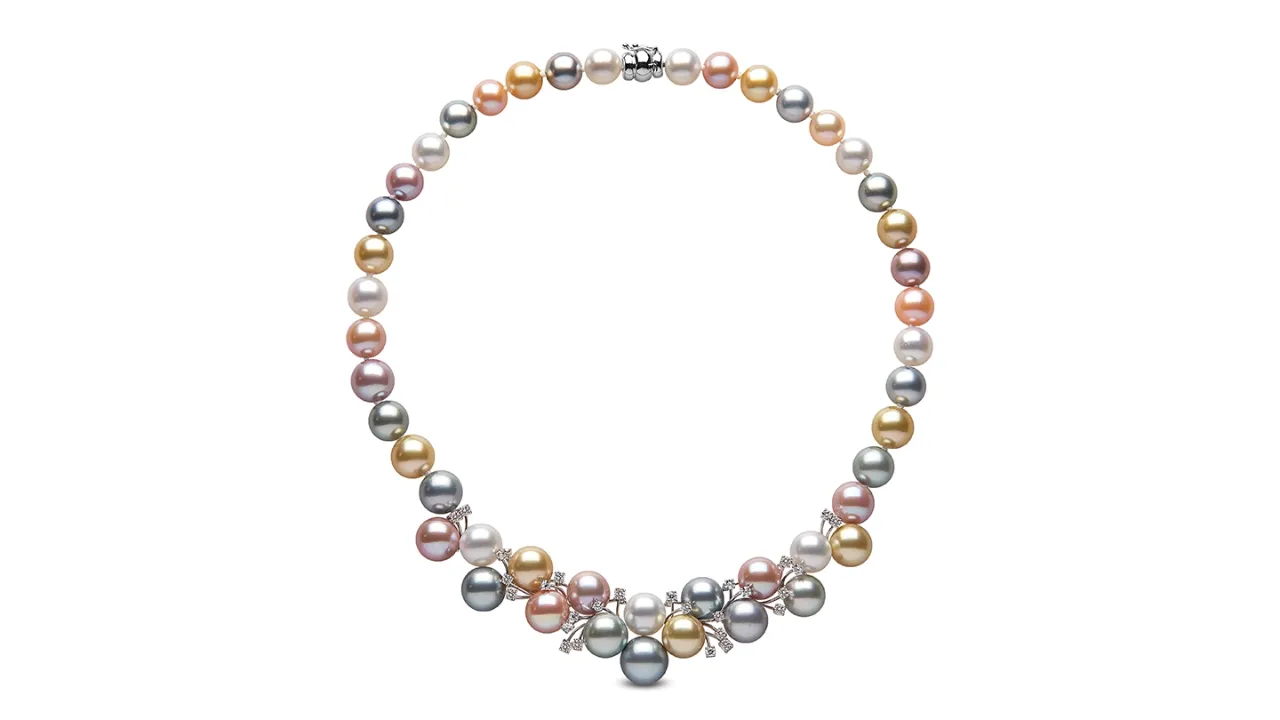
Different types of pearls vary in size, color, luster and value because they are formed by different mollusks in freshwater and saltwater environments around the world. From colorful freshwater pearls to the classic white glow of Akoya pearls, each type offers its own unique appeal.
Understanding these differences will help you speak more confidently with your customers and guide them towards the pearls that fit their style and budget. Below, we take a closer look at what sets each type apart.
In this article, we’ll cover:
- Freshwater Pearls
- Saltwater Pearls
- Akoya
- Tahitian
- South Sea
- Cultured vs. Natural pearls
- How to choose quality pearls
- The GIA 7 Pearl Value Factors™
- GIA Pearl Reports
FRESHWATER PEARLS
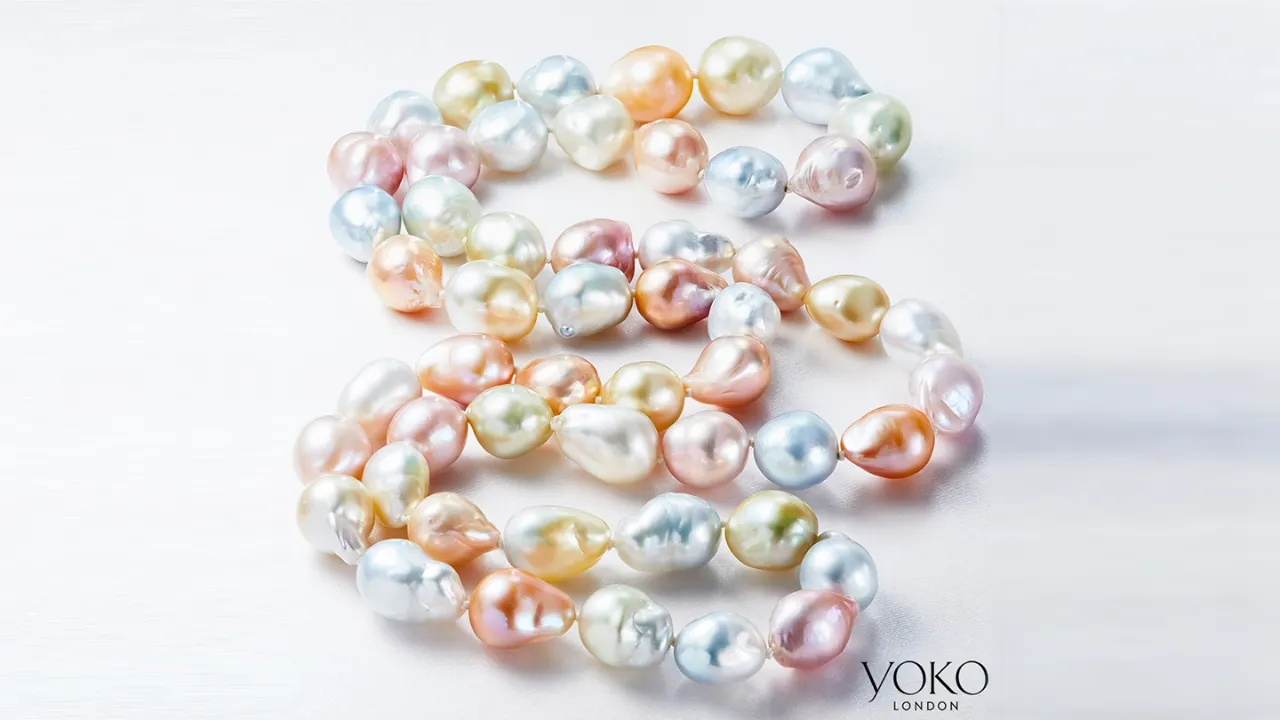
Freshwater pearls are known for their versatility, wide color range and friendly price point. Cultured primarily in lakes and ponds, they have evolved dramatically over the past two decades. Advances in farming techniques have resulted in pearls that are larger, rounder and more lustrous than earlier generations—making today’s freshwater pearls more refined than ever before.
Color, Luster & Orient
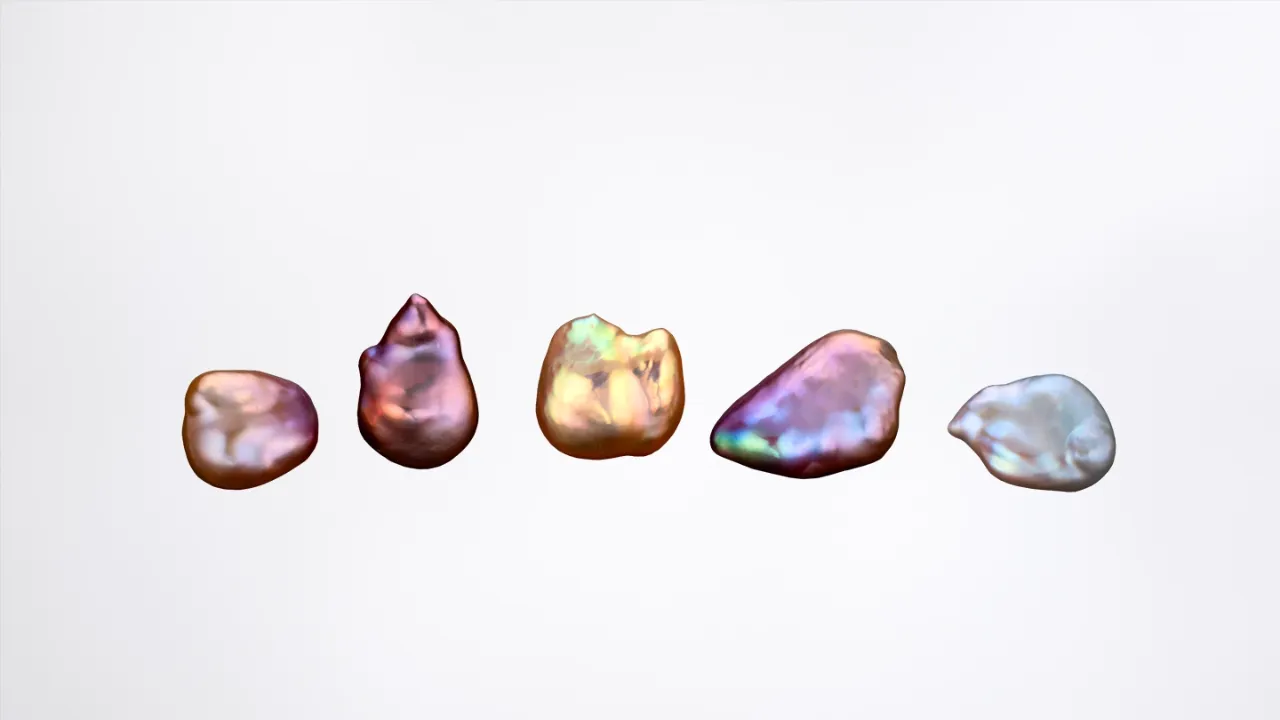
In addition to classic white, they commonly appear in soft pastel shades such as purple, pink, peach, yellow, and lavender. Their luster can range from soft and satiny to bright and reflective. High-quality freshwater pearls may also show overtones, subtle secondary hues that sit over the main bodycolor, and occasionally orient, a delicate, rainbow-like iridescence that appears to shimmer across the surface. These optical effects are created as layers of nacre interact with light, giving the pearl depth and dimension.
Culturing Methods
Freshwater pearls are cultured in freshwater Hyriopsis mussels in rivers, lakes and ponds. While many freshwater pearls have traditionally been tissue-nucleated rather than bead-nucleated, bead-cultured freshwater pearls have become increasingly common in today’s market.
Tissue-Nucleated Pearls
In tissue nucleation, a pearl farmer places a small piece of mantle tissue into a mollusk to initiate pearl growth. The mollusk then secretes layers of nacre through the same natural biological process that forms natural pearls. Tissue-nucleated freshwater pearls are often composed almost entirely of nacre, rather than containing a shell bead.
This “solid nacre” structure contributes to:
- Durability
- Resistance to chipping
- A soft, layered glow
Bead-Nucleated Pearls
Some freshwater pearls are bead-nucleated, meaning a shell bead and mantle tissue are inserted to initiate growth. Increasingly common in today’s market, this method can result in larger pearl sizes and rounder, more symmetrical shapes.
Size
Freshwater pearls typically range from 6 to 12 millimeters, though sizes can vary widely depending on cultivation time and technique. Smaller pearls are common in classic strands and fashion jewelry, while larger freshwater pearls have become increasingly available thanks to modern culturing advancements.
In recent years, improved methods have allowed freshwater pearls to grow rounder and larger than in the past. Edison pearls, in particular, can range from 11 to 16 millimeters or more, rivaling the size of Tahitian and even South Sea pearls.
Because freshwater mussels can produce multiple pearls at once and are cultivated in large numbers, freshwater pearls offer the broadest range of colors and sizes at accessible price points.
Edison Pearls: A Modern Innovation
In recent years, a newer category known as Edison pearls has redefined what freshwater pearls can be. Unlike traditional freshwater pearls, Edison pearls are bead-nucleated, meaning a round bead is inserted into the mussel along with mantle tissue. This allows them to grow larger and more consistently round.
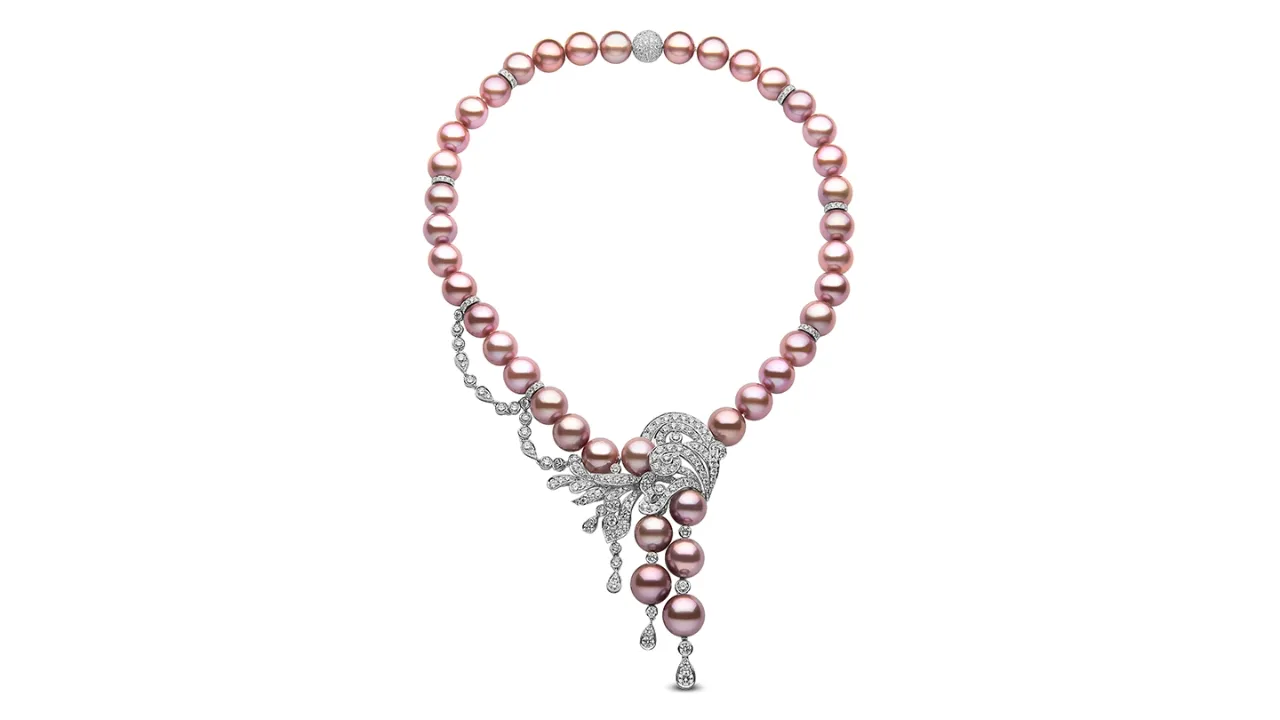
Edison pearls often range from 11 to 16 millimeters or more, rivaling the size of South Sea and Tahitian pearls. They are known for strong luster and vibrant colors, including white, metallic pink, peach and purple.
By combining modern culturing techniques with freshwater farming, Edison pearls bridge the gap between traditional freshwater pearls and larger saltwater varieties — often at a more accessible price point.
Where They’re Grown
Freshwater pearls are cultivated primarily in China, which leads global production. Because these mussels can produce multiple pearls per cycle and do not require a bead nucleus in most cases, freshwater pearls remain one of the most widely available, affordable and versatile pearl types in the market.
SALTWATER PEARLS
Saltwater cultured pearls include well-known types such as akoya, South Sea and Tahitian pearls. They are cultivated in marine environments in regions including Japan, China and Vietnam (akoya), Australia and Southeast Asia (South Sea), and French Polynesia (Tahitian). Each has distinct characteristics shaped by its host mollusk and environment.
AKOYA PEARLS
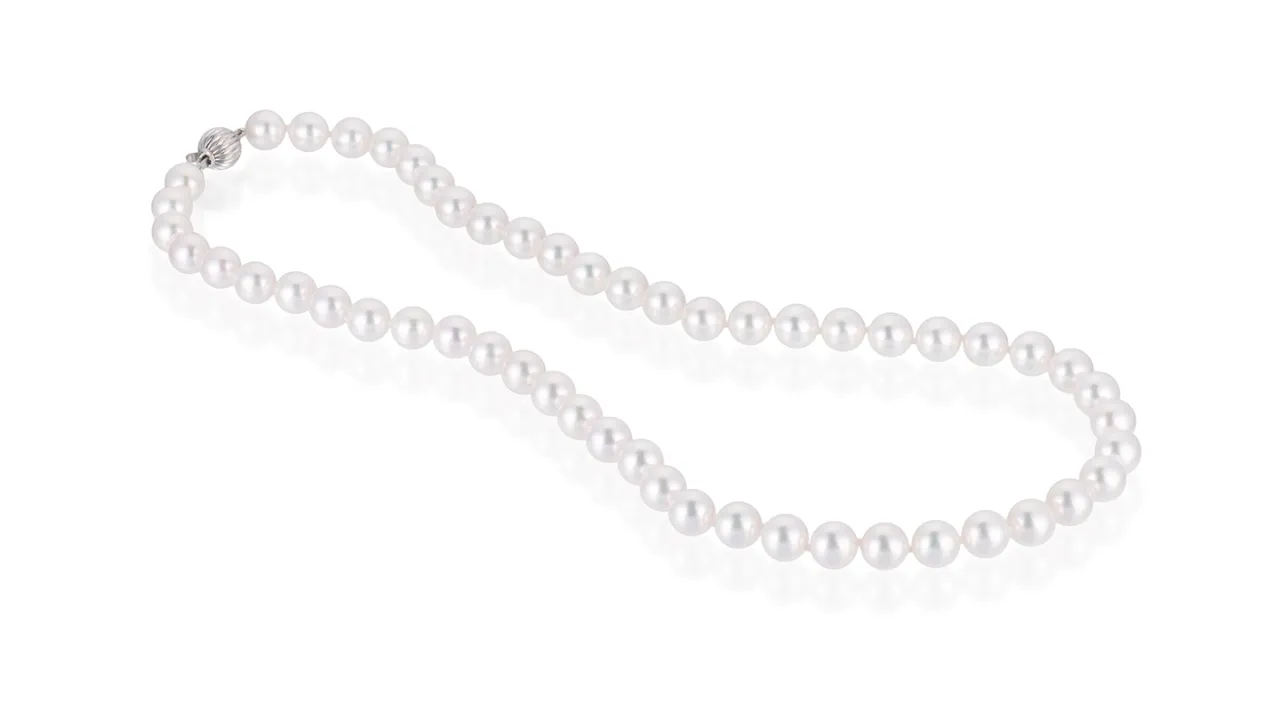
Akoya pearls are the classic white pearls most people envision when they think of a traditional strand. While smaller than other pearl types, they are celebrated for their round shape and crisp, mirror-like luster and have long been associated with timeless elegance.
Color, Luster & Overtones
Akoya pearls are best known for their white bodycolor and sharp, mirror-like luster. Light reflects sharply off the surface, creating a bright, almost reflective sheen — one of the hallmarks of high-quality Akoya pearls.
Overtones — subtle secondary hues that float over the surface — add another dimension to their ethereal beauty.
Common Akoya overtones include:
- Rose (or Rosé) – a soft pinkish glow that enhances warmth
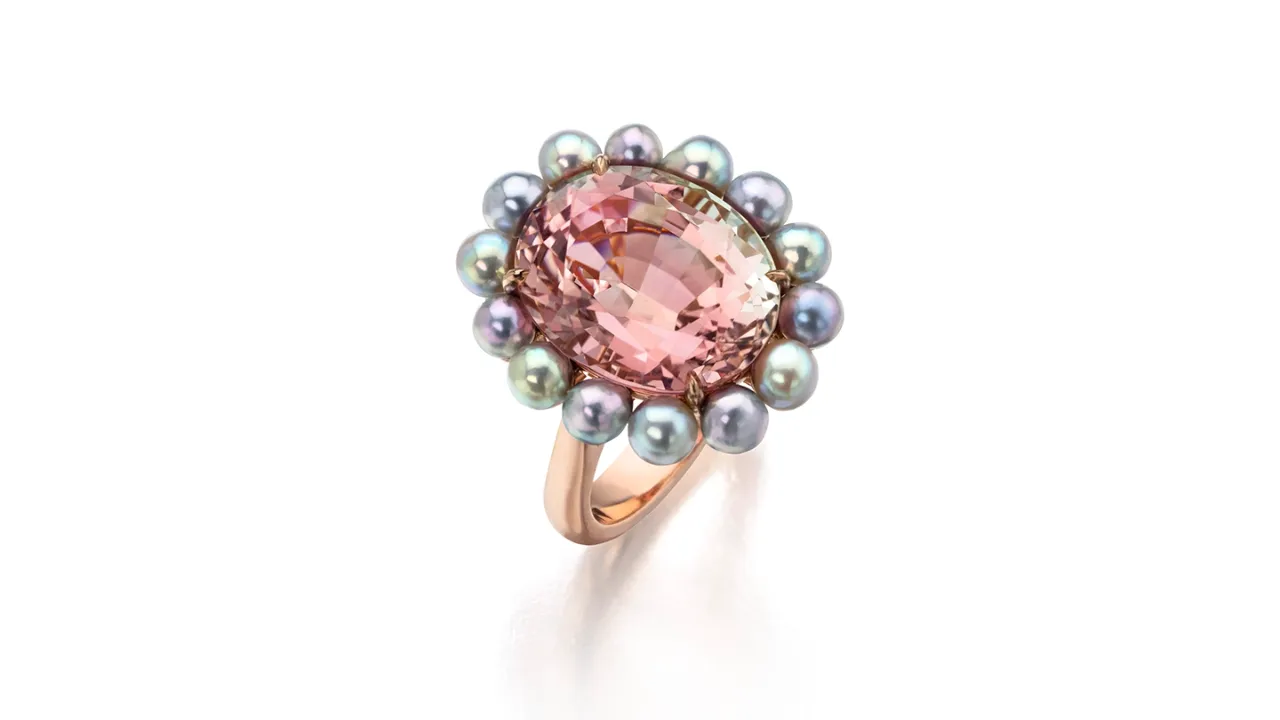
- In addition to classic white, some Akoya pearls naturally display a rare blue bodycolor. Blue Akoya pearls often feature silvery-gray tones with cool overtones, offering a distinctive and contemporary alternative to traditional white strands.
Culturing & Nacre
Akoya pearls are produced by the saltwater oyster Pinctada fucata. They are bead-nucleated. This means a pearl farmer places a round shell bead and a piece of mantle tissue into a mollusk to initiate pearl growth. The mollusk then coats the nucleus with layers of nacre through the same natural biological process that forms natural pearls.
During cultivation:
• Each oyster typically produces one pearl at a time
• Culturing generally takes 10 to 24 months
• The pearls develop tight, even nacre layers that contribute to their sharp luster
Cultivated in cooler waters, Akoya pearls form nacre more slowly, resulting in a finer structure that gives them their signature bright, mirror-like luster.
Size
Akoya pearls are typically smaller than Tahitian or South Sea pearls, most commonly ranging from 6 to 9 millimeters. Pearls over 9 millimeters are considered larger and become increasingly rare — and more valuable.
Their more modest size contributes to their refined, classic look. Akoya pearls are especially popular in traditional strands where uniformity and roundness are emphasized.
Because each oyster typically produces only one pearl at a time and Akoya pearls are often harvested after a relatively short growth period, they generally do not reach the larger sizes seen in other pearl types.
Hanadama: Akoya Pearls with Exceptional Quality
Now Recognized on GIA Reports
Hanadama (meaning “flower pearl”) is a historical Japanese trade term used to describe akoya cultured pearls with Excellent luster, Excellent to Very Good nacre and matching (for pairs and strands) and clean to slightly spotted surfaces.
On qualifying GIA Pearl Classification Reports, a hanadama comment may be included for akoya cultured pearls that meet strict grading criteria. To receive this designation, pearls must display:
• Round to near-round shapes
• White body color (with or without overtones)
• Excellent luster, nacre quality and matching
• Clean to slightly spotted surfaces
Hanadama quality pearls are among the most prized treasures in the world of akoya cultured pearls.
Where They’re Grown
Akoya pearls are cultivated primarily in Japan, Vietnam and China, with Japan historically recognized as the birthplace of modern pearl culturing.
Their saltwater environment, combined with careful farming practices, helps produce their signature round shape and brilliant shine.
In recent years, certain freshwater pearls have been marketed as “Freshwater Akoyas” even though they are not akoya pearls. This terminology is misleading to consumers.
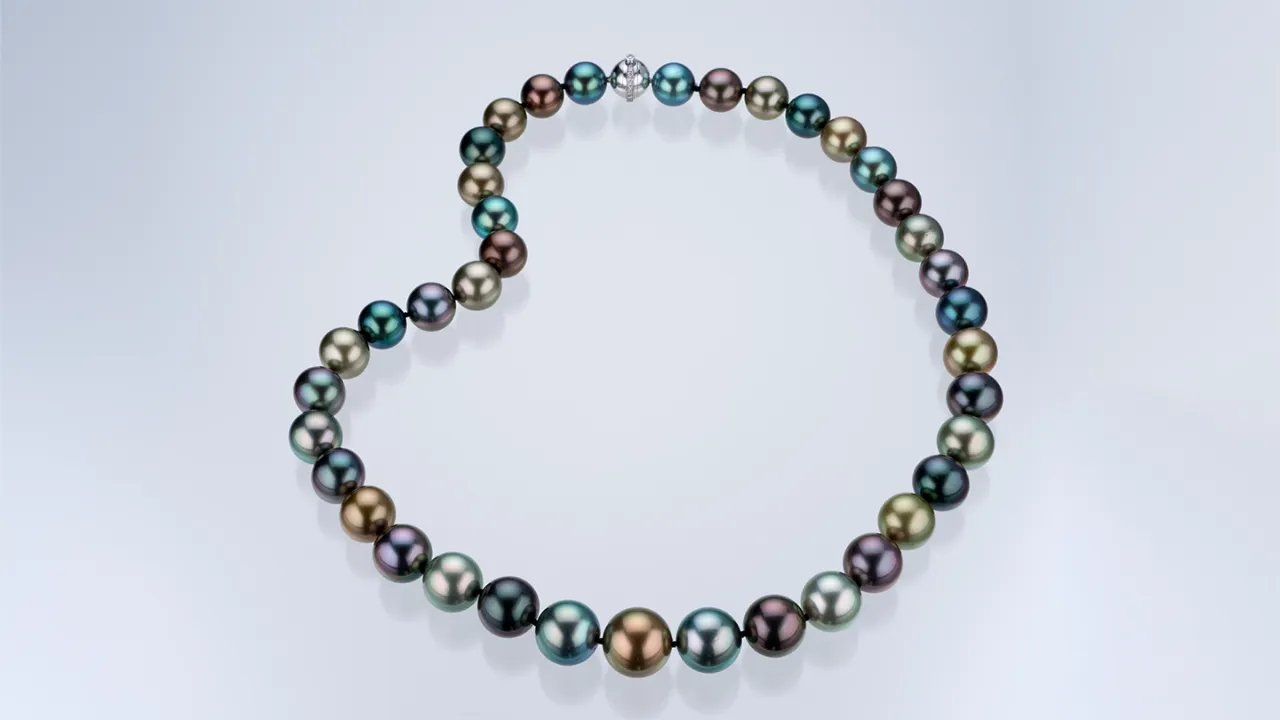
TAHITIAN PEARLS
Tahitian pearls are known for their dark bodycolors and colorful overtones. Often referred to as “black pearls,” they are not truly black — but instead display a wide range of dark, naturally occurring bodycolors from gray to silver to brown.
With their larger average size (8 – 14 mm) and rich tones, Tahitian pearls offer a modern, statement-making alternative to classic white strands.
Color, Luster & Overtones
Tahitian pearls commonly appear in shades of:
• Charcoal gray
• Silver
• Green
• Brown
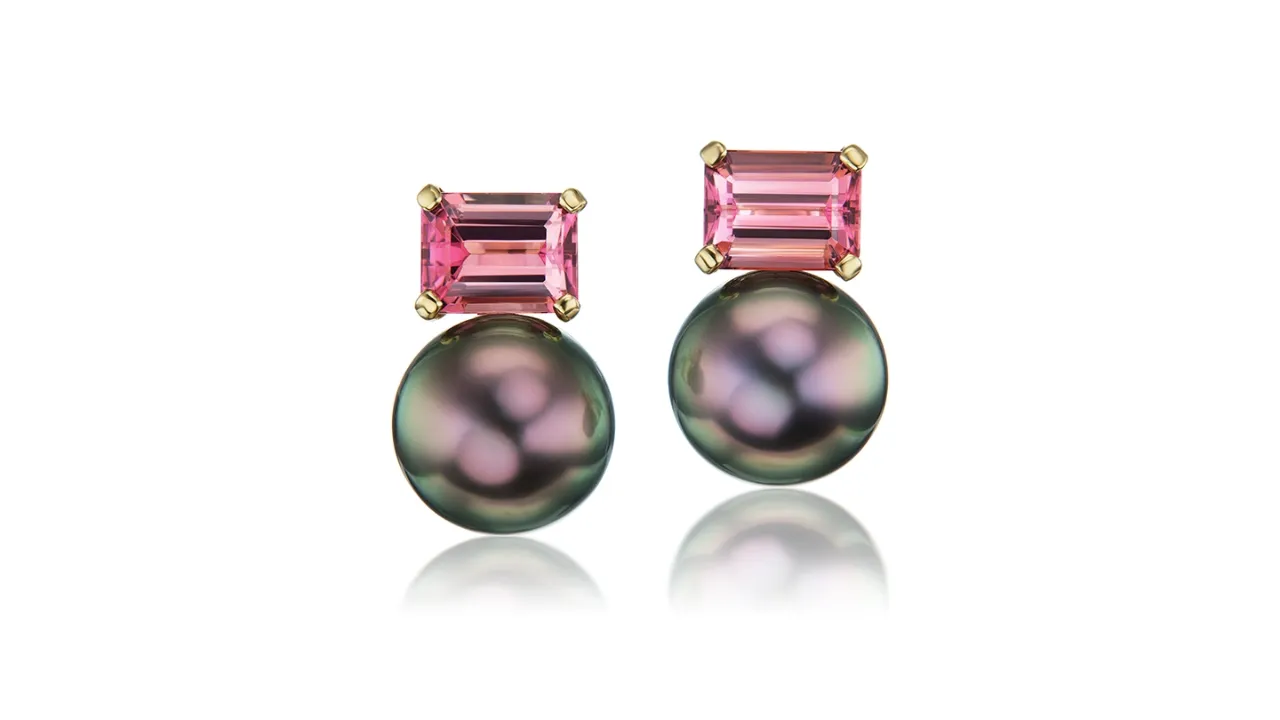
High-quality Tahitian pearls often display strong overtones — flashes of green, blue, purple, pink or bronze that shimmer across the surface. This can give them a metallic-looking sheen.
Overtones/ Orient
• Cherry (pink to magenta overtone)
• Peacock (green with hints of rose or purple). The most valuable.
• Aubergine (deep purple overtone)
Their luster ranges from bright to satiny, with high-quality pearls exhibiting a deep, reflective glow that enhances their rich color.
Culturing & Growth
Tahitian pearls are bead-nucleated and grown in the saltwater oyster Pinctada margaritifera, commonly known as the black-lipped oyster.
Typically:
• One pearl is produced per oyster at a time
• Culturing takes about 18 to 24 months
The dark inner shell of the oyster contributes to the pearl’s natural bodycolor.
Size
Tahitian pearls range from 8 to 14 millimeters. Sizes above 14 millimeters are less common and can command higher prices.
Size is influenced by both growth time and environmental conditions. Larger Tahitian pearls take longer to grow and are more limited in supply. As a pearl grows over time, it becomes more likely to develop slight irregularities in shape or surface. Large pearls with round, smooth surfaces are especially rare and valuable.
Where They’re Grown
Tahitian pearls are cultivated primarily in French Polynesia, particularly around Tahiti and its surrounding islands. Warm lagoon waters and careful farming practices help produce their distinctive tones and surface quality.
Because production is limited to specific regions and yields are lower than freshwater pearls, Tahitian pearls tend to command higher prices.
SOUTH SEA PEARLS
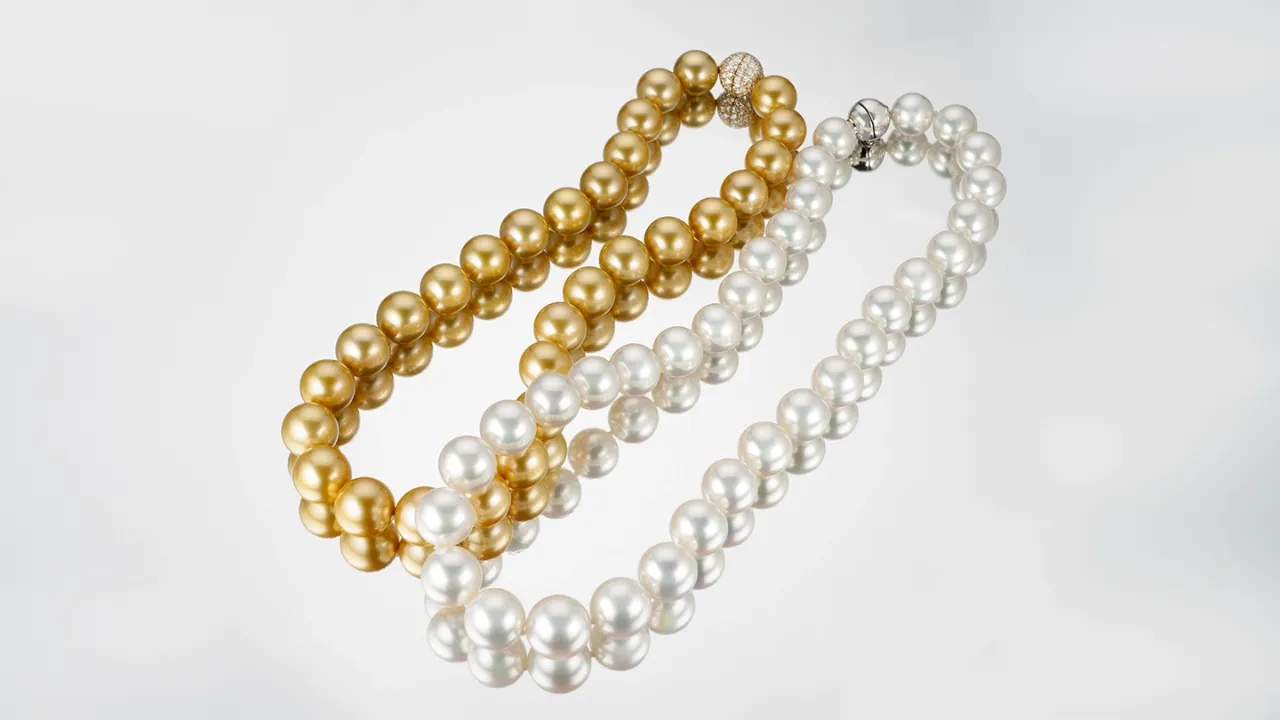
South Sea pearls are often considered the most luxurious of all cultured pearl types. Known for their impressive size and soft, satiny luster, they make a bold yet refined statement.
These pearls are cultivated in warm saltwater environments and are prized for their white to golden bodycolors. Because of their rarity and longer growing periods, South Sea pearls typically command the highest prices among the major pearl types.
Color, Luster & Overtones
South Sea pearls are most commonly found in two natural bodycolors:
• White or Silver – ranging from bright white to soft silver tones
• Golden – from pale champagne to deep, rich gold
Their luster is typically described as soft and satiny rather than mirror-sharp. Because South Sea pearls have exceptionally thick nacre, light diffuses gently across the surface, creating a smooth, glowing effect that feels rich and dimensional.
Size
South Sea pearls are the largest of the four major cultured pearl types. They typically range from 8 to 18 millimeters, though larger sizes are possible.
Their larger average size contributes significantly to their value and visual impact. Even a simple strand of South Sea pearls makes a statement due to their scale alone.
Because of their long growth period — often 2 to 4 years — and the fact that each oyster usually produces only one pearl at a time, larger South Sea pearls are more limited in supply.
Culturing & Growth
South Sea pearls are bead-nucleated and grown in the saltwater oyster Pinctada maxima, one of the largest pearl oysters in the world.
There are two primary varieties of this oyster:
• The silver-lipped oyster, which produces white and silver pearls
• The gold-lipped oyster, which produces golden pearls
The size of the oyster allows it to produce larger pearls with thick nacre layers, contributing to both durability and the characteristic soft luster.
Where They’re Grown
South Sea pearls are cultivated primarily in Australia, Indonesia and the Philippines. The warm, nutrient-rich waters of these regions support the growth of the large Pinctada maxima oyster.
Because farming conditions have to be carefully controlled and production yields are relatively low, South Sea pearls remain among the rarest and most prestigious cultured pearls on the market.
PEARL COMPARISON CHART
Feature | Freshwater | Akoya | Tahitian | South Sea |
Typical Size | 6 – 16+ mm | 6 – 9+ mm | 8 – 14 mm | 9 – 16+ mm |
Value | Generally most affordable | Mid-range to High | Mid-range to High | High |
Bodycolors | White, pink, peach, lavender | White to cream | Gray, green, brown | White, silver, golden |
Overtones | Pink, green | Pink, green | Pink, green, orient | Pink, green, orient |
Luster | Soft to high | High, mirror-like | Satin to high | Soft, satin glow |
Primary Regions | China | Japan | French Polynesia | Australia, Indonesia, Philippines |
Overall Look | Versatile, colorful, accessible | Classic, elegant, traditional | Modern, dramatic, bold | Luxurious, bold, prestigious
|
NATURAL VS. CULTURED PEARLS
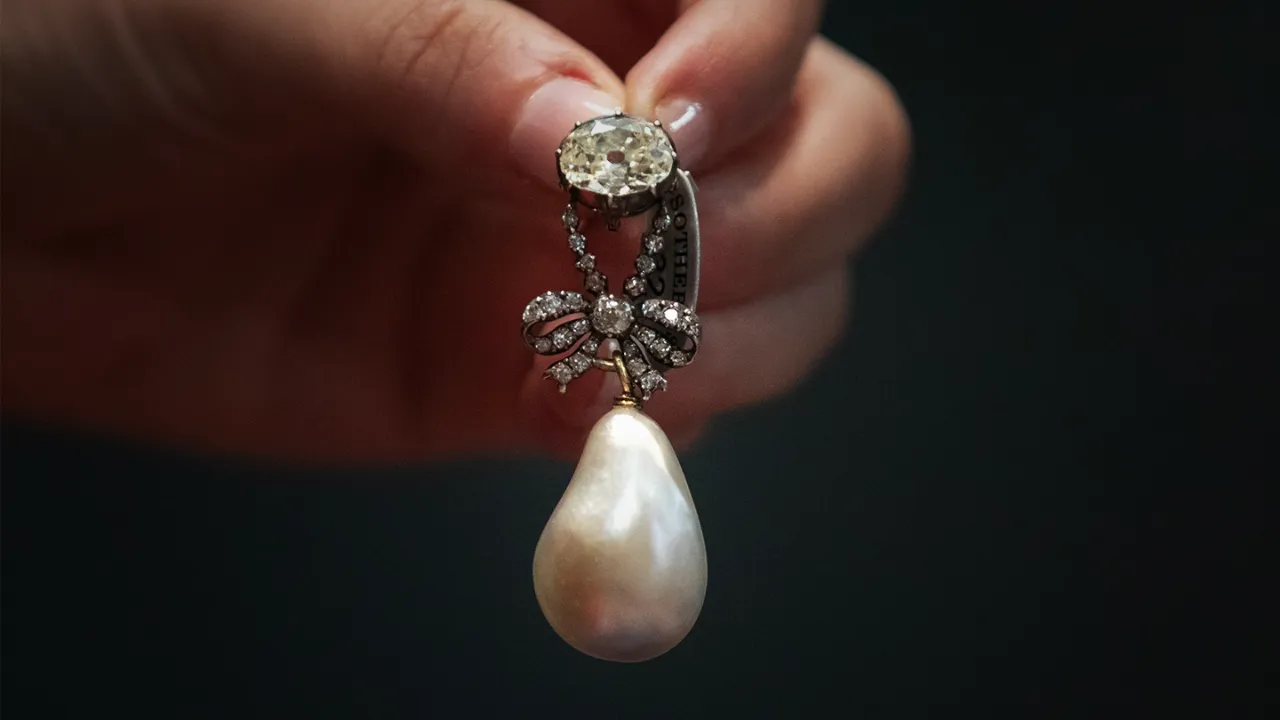
In nature, pearls form when a foreign substance—such as a fragment of shell or a parasite—enters a mollusk. To protect itself, the mollusk secretes layers of nacre around the irritant, gradually forming a natural pearl. This process occurs only rarely, and most natural pearls are small and irregular in shape.
Because of their rarity, natural pearls were once among the most prized gems in the world, often reserved for royalty and the elite. A famous story illustrates their extraordinary value. In 1917, Pierre Cartier reportedly traded a double strand of natural pearls for a Fifth Avenue mansion, which later became Cartier’s headquarters and flagship jewelry showroom.
Pearls became more widely available in the early 20th century, when Kokichi Mikimoto successfully developed methods for producing round cultured pearls. By the 1910s, cultured pearl production was underway, making pearls accessible to a much broader audience.
Cultured pearls are formed when a pearl farmer carefully places a bead or piece of mantle tissue into a mollusk to initiate pearl growth. The mollusk then coats the nucleus with layers of nacre through the same natural biological process that forms natural pearls.
Today, pearls are widely available, and the vast majority on the market are cultured unless specifically described as natural. As cultivation techniques have advanced, larger and more finely formed pearls have become increasingly common. Natural pearls, however, remain rare and highly prized.
The GIA 7 Pearl Value Factors™
With so many types of pearls available, how do you choose? Personal preference plays a role—from color and size to overall style—but quality also matters. The GIA 7 Pearl Value Factors™ provide a consistent way to evaluate and compare pearls, both within a type and across different varieties.
These seven factors—size, shape, color, luster, surface, nacre, and matching—form a standardized system for assessing the characteristics that contribute to a pearl’s appearance and value. Together, they provide a common language for evaluating pearls, helping buyers make informed decisions and enabling more consistent communication between sellers, appraisers and gemologists.
Size
Pearl size is typically measured in millimeters across the diameter. Larger pearls are generally rarer, as they require more time for the mollusk to form. With longer growth, pearls are more likely to develop surface blemishes. As size increases, value often rises—especially when paired with strong luster and clean surfaces.
Shape
Pearls form in a variety of natural shapes depending on how they grow inside the mollusk.
Round
Round pearls are the most symmetrical and traditionally the most prized because of their balanced appearance.
Near-round
Near-round pearls are slightly off-round but still appear largely spherical. They offer a similar look to round pearls, often at a more accessible price point.
Drop
Also known as tear or pear shapes, drop pearls taper toward one end. Their elegant silhouette makes them especially popular for earrings and pendants.
Oval
Oval pearls have elongated, symmetrical shapes. Similar to drop pearls but without a tapered point, they are popular in earrings and pendants.
Button
Button pearls have rounded, domed shapes with flattened backsides. Popular in stud earrings, pendants and rings, their flat back allows them to have a lower profile.
Semi-Baroque
Semi-baroque pearls show slight irregularities in shape, offering more symmetry than baroque pearls while retaining an organic appearance.
Baroque
Baroque pearls have irregular, free-form shapes created naturally during the growth process. While generally less valuable than other shapes (all other factors being equal), they are prized for their individuality and are often featured in artistic and contemporary jewelry designs.
Color
Pearl color includes two elements: bodycolor, and overtone or orient.
Bodycolor is the pearl’s primary color, such as white, cream, black, yellow or pink. Overtone refers to a subtle secondary color that appears over the bodycolor. Orient describes the iridescent rainbow-like effect sometimes seen on the surface of high-quality pearls.
Bodycolor is a matter of personal preference, although more saturated golden South Sea pearls typically cost more than those with paler champagne colors. Pearls with overtone or orient are typically more sought-after as they are rarer and add depth and visual interest.
Luster
Luster refers to how light reflected from or near the pearl’s surface, evaluated by the intensity and sharpness of reflections.
High-quality pearls display bright, sharp reflections and a strong inner glow. Pearls with lower luster may appear dull or chalky, with softer reflections. Because luster has such a strong impact on visual beauty, it is often considered one of the most important pearl quality factors.
Surface
Because pearls form naturally inside mollusks, most have small surface features such as spots, bumps or wrinkles. These are known as surface characteristics.
Pearls with smoother, cleaner surfaces are generally more desirable. Minor marks are common and may be acceptable, especially if they are small or positioned where they are less noticeable in a finished piece of jewelry.
Nacre
Nacre is the substance that forms a pearl. It consists of microscopic layers of calcium carbonate deposited by the mollusk over time.
Thick, well-formed nacre contributes to durability and enhances luster. Thin nacre can make pearls appear dull and, in some cultured pearls, the underlying bead may become visible. Pearls with higher nacre quality tend to display deeper luster and greater longevity.
Matching
Matching is evaluated when pearls appear together in jewelry such as strands, earrings or bracelets. It describes how closely the pearls resemble one another in size, shape, color, luster and surface quality.
Well-matched pearls create a harmonious appearance, especially in necklaces where consistency in color and luster enhances the overall elegance of the piece. Design is also taken into account—for example, in graduated strands, pearls are intentionally arranged in varying sizes while maintaining a balanced and cohesive look.
GIA PEARL REPORTS OFFER TRANSPARENCY AND TRUST
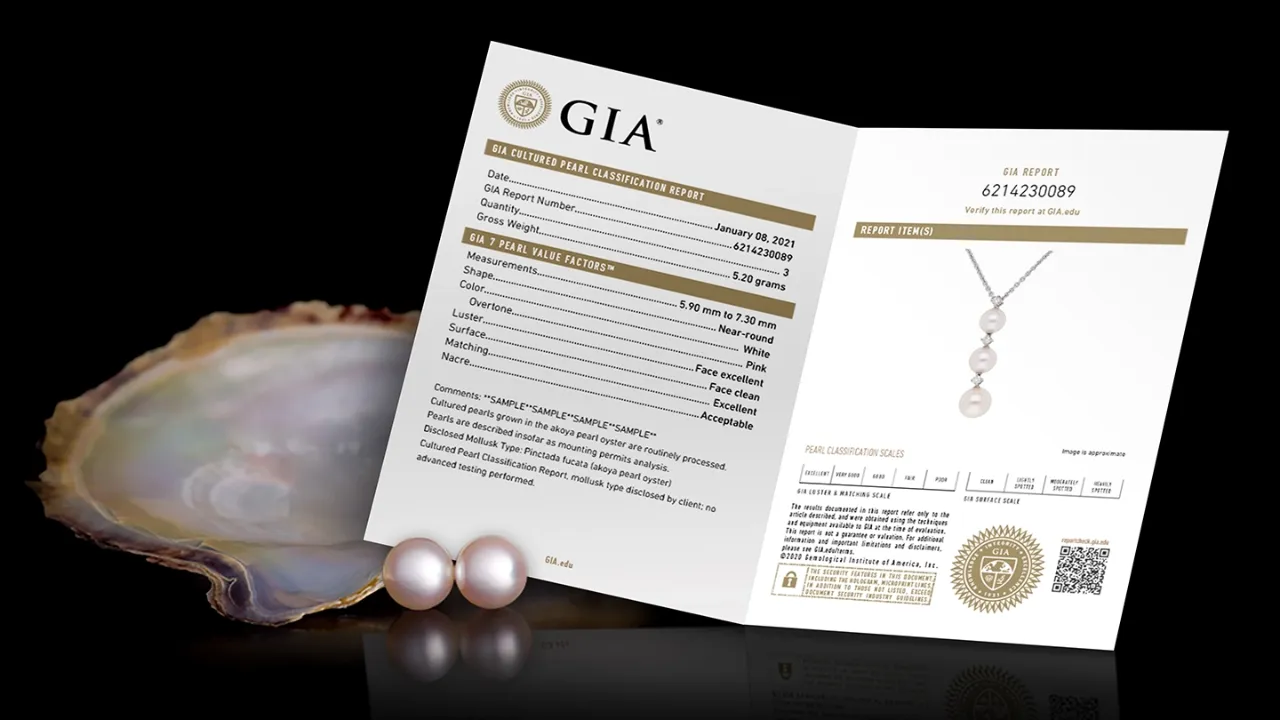
A GIA Pearl Report provides an independent, expert evaluation of a pearl’s identity and characteristics, helping you better understand its origin, quality and value.
A GIA Pearl Identification Report determines whether a pearl is natural or cultured and identifies the environment in which it formed—saltwater or freshwater—along with key identifying features. This report is especially important for confirming rarity, as natural pearls are far less common than cultured pearls.
A GIA Cultured Pearl Classification Report, on the other hand, focuses on quality. It evaluates cultured pearls according to the GIA 7 Pearl Value Factors™—size, shape, color, luster, surface, nacre and matching—which together describe their appearance and overall quality.
A GIA Pearl Identification and Classification Report combines identification and classification for cultured saltwater pearls. It identifies the type of cultured pearl, whether the pearl has been treated, and evaluates cultured pearls according to the GIA 7 Pearl Value Factors™.
A GIA report offers deeper insight into a pearl’s journey—from its formation within a living mollusk to its place in a finished piece of jewelry. Whether you are drawn to the crisp luster of an Akoya, the golden glow of a South Sea pearl or the vibrant hues of a Tahitian pearl, understanding these characteristics adds meaning and confidence to your purchase.
By providing trusted, unbiased information, GIA reports help you make informed decisions, compare pearls more effectively and fully appreciate the natural processes that make each pearl unique.
UNDERSTANDING FRESHWATER VS. SALTWATER PEARLS
Pearls are produced by different mollusk species in regions around the world. The major cultured pearl types—freshwater, Akoya, Tahitian and South Sea—each have distinct characteristics shaped by their environment and host.
Freshwater pearls are known for their wide range of shapes, sizes and natural pastel colors.
Saltwater pearls include three primary types. Akoya pearls are prized for their classic round shapes and bright, mirror-like luster, making them a traditional choice for strands. Tahitian pearls are celebrated for their dramatic dark bodycolors, with overtones such as green, peacock and aubergine. South Sea pearls are among the largest cultured pearls and are valued for their soft, satin-like luster and colors ranging from white to golden.
Each type offers its own beauty and character. By understanding both pearl type and the quality factors evaluated on a GIA Pearl Report, buyers can better appreciate the differences that make every pearl unique—and choose the one that speaks to them.
Different types of pearls vary in size, color, luster and value because they are formed by different mollusks in freshwater and saltwater environments around the world. From colorful freshwater pearls to the classic white glow of Akoya pearls, each type offers its own unique appeal.
Understanding these differences will help you speak more confidently with your customers and guide them towards the pearls that fit their style and budget. Below, we take a closer look at what sets each type apart.
In this article, we’ll cover:
- Freshwater Pearls
- Saltwater Pearls
- Akoya
- Tahitian
- South Sea
- Cultured vs. Natural pearls
- How to choose quality pearls
- The GIA 7 Pearl Value Factors™
- GIA Pearl Reports
FRESHWATER PEARLS
Freshwater pearls are known for their versatility, wide color range and friendly price point. Cultured primarily in lakes and ponds, they have evolved dramatically over the past two decades. Advances in farming techniques have resulted in pearls that are larger, rounder and more lustrous than earlier generations—making today’s freshwater pearls more refined than ever before.
Color, Luster & Orient
In addition to classic white, they commonly appear in soft pastel shades such as purple, pink, peach, yellow, and lavender. Their luster can range from soft and satiny to bright and reflective. High-quality freshwater pearls may also show overtones, subtle secondary hues that sit over the main bodycolor, and occasionally orient, a delicate, rainbow-like iridescence that appears to shimmer across the surface. These optical effects are created as layers of nacre interact with light, giving the pearl depth and dimension.
Culturing Methods
Freshwater pearls are cultured in freshwater Hyriopsis mussels in rivers, lakes and ponds. While many freshwater pearls have traditionally been tissue-nucleated rather than bead-nucleated, bead-cultured freshwater pearls have become increasingly common in today’s market.
Tissue-Nucleated Pearls
In tissue nucleation, a pearl farmer places a small piece of mantle tissue into a mollusk to initiate pearl growth. The mollusk then secretes layers of nacre through the same natural biological process that forms natural pearls. Tissue-nucleated freshwater pearls are often composed almost entirely of nacre, rather than containing a shell bead.
This “solid nacre” structure contributes to:
- Durability
- Resistance to chipping
- A soft, layered glow
Bead-Nucleated Pearls
Some freshwater pearls are bead-nucleated, meaning a shell bead and mantle tissue are inserted to initiate growth. Increasingly common in today’s market, this method can result in larger pearl sizes and rounder, more symmetrical shapes.
Size
Freshwater pearls typically range from 6 to 12 millimeters, though sizes can vary widely depending on cultivation time and technique. Smaller pearls are common in classic strands and fashion jewelry, while larger freshwater pearls have become increasingly available thanks to modern culturing advancements.
In recent years, improved methods have allowed freshwater pearls to grow rounder and larger than in the past. Edison pearls, in particular, can range from 11 to 16 millimeters or more, rivaling the size of Tahitian and even South Sea pearls.
Because freshwater mussels can produce multiple pearls at once and are cultivated in large numbers, freshwater pearls offer the broadest range of colors and sizes at accessible price points.
Edison Pearls: A Modern Innovation
In recent years, a newer category known as Edison pearls has redefined what freshwater pearls can be. Unlike traditional freshwater pearls, Edison pearls are bead-nucleated, meaning a round bead is inserted into the mussel along with mantle tissue. This allows them to grow larger and more consistently round.
Edison pearls often range from 11 to 16 millimeters or more, rivaling the size of South Sea and Tahitian pearls. They are known for strong luster and vibrant colors, including white, metallic pink, peach and purple.
By combining modern culturing techniques with freshwater farming, Edison pearls bridge the gap between traditional freshwater pearls and larger saltwater varieties — often at a more accessible price point.
Where They’re Grown
Freshwater pearls are cultivated primarily in China, which leads global production. Because these mussels can produce multiple pearls per cycle and do not require a bead nucleus in most cases, freshwater pearls remain one of the most widely available, affordable and versatile pearl types in the market.
SALTWATER PEARLS
Saltwater cultured pearls include well-known types such as akoya, South Sea and Tahitian pearls. They are cultivated in marine environments in regions including Japan, China and Vietnam (akoya), Australia and Southeast Asia (South Sea), and French Polynesia (Tahitian). Each has distinct characteristics shaped by its host mollusk and environment.
AKOYA PEARLS
Akoya pearls are the classic white pearls most people envision when they think of a traditional strand. While smaller than other pearl types, they are celebrated for their round shape and crisp, mirror-like luster and have long been associated with timeless elegance.
Color, Luster & Overtones
Akoya pearls are best known for their white bodycolor and sharp, mirror-like luster. Light reflects sharply off the surface, creating a bright, almost reflective sheen — one of the hallmarks of high-quality Akoya pearls.
Overtones — subtle secondary hues that float over the surface — add another dimension to their ethereal beauty.
Common Akoya overtones include:
- Rose (or Rosé) – a soft pinkish glow that enhances warmth
- In addition to classic white, some Akoya pearls naturally display a rare blue bodycolor. Blue Akoya pearls often feature silvery-gray tones with cool overtones, offering a distinctive and contemporary alternative to traditional white strands.
Culturing & Nacre
Akoya pearls are produced by the saltwater oyster Pinctada fucata. They are bead-nucleated. This means a pearl farmer places a round shell bead and a piece of mantle tissue into a mollusk to initiate pearl growth. The mollusk then coats the nucleus with layers of nacre through the same natural biological process that forms natural pearls.
During cultivation:
• Each oyster typically produces one pearl at a time
• Culturing generally takes 10 to 24 months
• The pearls develop tight, even nacre layers that contribute to their sharp luster
Cultivated in cooler waters, Akoya pearls form nacre more slowly, resulting in a finer structure that gives them their signature bright, mirror-like luster.
Size
Akoya pearls are typically smaller than Tahitian or South Sea pearls, most commonly ranging from 6 to 9 millimeters. Pearls over 9 millimeters are considered larger and become increasingly rare — and more valuable.
Their more modest size contributes to their refined, classic look. Akoya pearls are especially popular in traditional strands where uniformity and roundness are emphasized.
Because each oyster typically produces only one pearl at a time and Akoya pearls are often harvested after a relatively short growth period, they generally do not reach the larger sizes seen in other pearl types.
Hanadama: Akoya Pearls with Exceptional Quality
Now Recognized on GIA Reports
Hanadama (meaning “flower pearl”) is a historical Japanese trade term used to describe akoya cultured pearls with Excellent luster, Excellent to Very Good nacre and matching (for pairs and strands) and clean to slightly spotted surfaces.
On qualifying GIA Pearl Classification Reports, a hanadama comment may be included for akoya cultured pearls that meet strict grading criteria. To receive this designation, pearls must display:
• Round to near-round shapes
• White body color (with or without overtones)
• Excellent luster, nacre quality and matching
• Clean to slightly spotted surfaces
Hanadama quality pearls are among the most prized treasures in the world of akoya cultured pearls.
Where They’re Grown
Akoya pearls are cultivated primarily in Japan, Vietnam and China, with Japan historically recognized as the birthplace of modern pearl culturing.
Their saltwater environment, combined with careful farming practices, helps produce their signature round shape and brilliant shine.
In recent years, certain freshwater pearls have been marketed as “Freshwater Akoyas” even though they are not akoya pearls. This terminology is misleading to consumers.
TAHITIAN PEARLS
Tahitian pearls are known for their dark bodycolors and colorful overtones. Often referred to as “black pearls,” they are not truly black — but instead display a wide range of dark, naturally occurring bodycolors from gray to silver to brown.
With their larger average size (8 – 14 mm) and rich tones, Tahitian pearls offer a modern, statement-making alternative to classic white strands.
Color, Luster & Overtones
Tahitian pearls commonly appear in shades of:
• Charcoal gray
• Silver
• Green
• Brown
High-quality Tahitian pearls often display strong overtones — flashes of green, blue, purple, pink or bronze that shimmer across the surface. This can give them a metallic-looking sheen.
Overtones/ Orient
• Cherry (pink to magenta overtone)
• Peacock (green with hints of rose or purple). The most valuable.
• Aubergine (deep purple overtone)
Their luster ranges from bright to satiny, with high-quality pearls exhibiting a deep, reflective glow that enhances their rich color.
Culturing & Growth
Tahitian pearls are bead-nucleated and grown in the saltwater oyster Pinctada margaritifera, commonly known as the black-lipped oyster.
Typically:
• One pearl is produced per oyster at a time
• Culturing takes about 18 to 24 months
The dark inner shell of the oyster contributes to the pearl’s natural bodycolor.
Size
Tahitian pearls range from 8 to 14 millimeters. Sizes above 14 millimeters are less common and can command higher prices.
Size is influenced by both growth time and environmental conditions. Larger Tahitian pearls take longer to grow and are more limited in supply. As a pearl grows over time, it becomes more likely to develop slight irregularities in shape or surface. Large pearls with round, smooth surfaces are especially rare and valuable.
Where They’re Grown
Tahitian pearls are cultivated primarily in French Polynesia, particularly around Tahiti and its surrounding islands. Warm lagoon waters and careful farming practices help produce their distinctive tones and surface quality.
Because production is limited to specific regions and yields are lower than freshwater pearls, Tahitian pearls tend to command higher prices.
SOUTH SEA PEARLS
South Sea pearls are often considered the most luxurious of all cultured pearl types. Known for their impressive size and soft, satiny luster, they make a bold yet refined statement.
These pearls are cultivated in warm saltwater environments and are prized for their white to golden bodycolors. Because of their rarity and longer growing periods, South Sea pearls typically command the highest prices among the major pearl types.
Color, Luster & Overtones
South Sea pearls are most commonly found in two natural bodycolors:
• White or Silver – ranging from bright white to soft silver tones
• Golden – from pale champagne to deep, rich gold
Their luster is typically described as soft and satiny rather than mirror-sharp. Because South Sea pearls have exceptionally thick nacre, light diffuses gently across the surface, creating a smooth, glowing effect that feels rich and dimensional.
Size
South Sea pearls are the largest of the four major cultured pearl types. They typically range from 8 to 18 millimeters, though larger sizes are possible.
Their larger average size contributes significantly to their value and visual impact. Even a simple strand of South Sea pearls makes a statement due to their scale alone.
Because of their long growth period — often 2 to 4 years — and the fact that each oyster usually produces only one pearl at a time, larger South Sea pearls are more limited in supply.
Culturing & Growth
South Sea pearls are bead-nucleated and grown in the saltwater oyster Pinctada maxima, one of the largest pearl oysters in the world.
There are two primary varieties of this oyster:
• The silver-lipped oyster, which produces white and silver pearls
• The gold-lipped oyster, which produces golden pearls
The size of the oyster allows it to produce larger pearls with thick nacre layers, contributing to both durability and the characteristic soft luster.
Where They’re Grown
South Sea pearls are cultivated primarily in Australia, Indonesia and the Philippines. The warm, nutrient-rich waters of these regions support the growth of the large Pinctada maxima oyster.
Because farming conditions have to be carefully controlled and production yields are relatively low, South Sea pearls remain among the rarest and most prestigious cultured pearls on the market.
PEARL COMPARISON CHART
Feature | Freshwater | Akoya | Tahitian | South Sea |
Typical Size | 6 – 16+ mm | 6 – 9+ mm | 8 – 14 mm | 9 – 16+ mm |
Value | Generally most affordable | Mid-range to High | Mid-range to High | High |
Bodycolors | White, pink, peach, lavender | White to cream | Gray, green, brown | White, silver, golden |
Overtones | Pink, green | Pink, green | Pink, green, orient | Pink, green, orient |
Luster | Soft to high | High, mirror-like | Satin to high | Soft, satin glow |
Primary Regions | China | Japan | French Polynesia | Australia, Indonesia, Philippines |
Overall Look | Versatile, colorful, accessible | Classic, elegant, traditional | Modern, dramatic, bold | Luxurious, bold, prestigious
|
NATURAL VS. CULTURED PEARLS
In nature, pearls form when a foreign substance—such as a fragment of shell or a parasite—enters a mollusk. To protect itself, the mollusk secretes layers of nacre around the irritant, gradually forming a natural pearl. This process occurs only rarely, and most natural pearls are small and irregular in shape.
Because of their rarity, natural pearls were once among the most prized gems in the world, often reserved for royalty and the elite. A famous story illustrates their extraordinary value. In 1917, Pierre Cartier reportedly traded a double strand of natural pearls for a Fifth Avenue mansion, which later became Cartier’s headquarters and flagship jewelry showroom.
Pearls became more widely available in the early 20th century, when Kokichi Mikimoto successfully developed methods for producing round cultured pearls. By the 1910s, cultured pearl production was underway, making pearls accessible to a much broader audience.
Cultured pearls are formed when a pearl farmer carefully places a bead or piece of mantle tissue into a mollusk to initiate pearl growth. The mollusk then coats the nucleus with layers of nacre through the same natural biological process that forms natural pearls.
Today, pearls are widely available, and the vast majority on the market are cultured unless specifically described as natural. As cultivation techniques have advanced, larger and more finely formed pearls have become increasingly common. Natural pearls, however, remain rare and highly prized.
The GIA 7 Pearl Value Factors™
With so many types of pearls available, how do you choose? Personal preference plays a role—from color and size to overall style—but quality also matters. The GIA 7 Pearl Value Factors™ provide a consistent way to evaluate and compare pearls, both within a type and across different varieties.
These seven factors—size, shape, color, luster, surface, nacre, and matching—form a standardized system for assessing the characteristics that contribute to a pearl’s appearance and value. Together, they provide a common language for evaluating pearls, helping buyers make informed decisions and enabling more consistent communication between sellers, appraisers and gemologists.
Size
Pearl size is typically measured in millimeters across the diameter. Larger pearls are generally rarer, as they require more time for the mollusk to form. With longer growth, pearls are more likely to develop surface blemishes. As size increases, value often rises—especially when paired with strong luster and clean surfaces.
Shape
Pearls form in a variety of natural shapes depending on how they grow inside the mollusk.
Round
Round pearls are the most symmetrical and traditionally the most prized because of their balanced appearance.
Near-round
Near-round pearls are slightly off-round but still appear largely spherical. They offer a similar look to round pearls, often at a more accessible price point.
Drop
Also known as tear or pear shapes, drop pearls taper toward one end. Their elegant silhouette makes them especially popular for earrings and pendants.
Oval
Oval pearls have elongated, symmetrical shapes. Similar to drop pearls but without a tapered point, they are popular in earrings and pendants.
Button
Button pearls have rounded, domed shapes with flattened backsides. Popular in stud earrings, pendants and rings, their flat back allows them to have a lower profile.
Semi-Baroque
Semi-baroque pearls show slight irregularities in shape, offering more symmetry than baroque pearls while retaining an organic appearance.
Baroque
Baroque pearls have irregular, free-form shapes created naturally during the growth process. While generally less valuable than other shapes (all other factors being equal), they are prized for their individuality and are often featured in artistic and contemporary jewelry designs.
Color
Pearl color includes two elements: bodycolor, and overtone or orient.
Bodycolor is the pearl’s primary color, such as white, cream, black, yellow or pink. Overtone refers to a subtle secondary color that appears over the bodycolor. Orient describes the iridescent rainbow-like effect sometimes seen on the surface of high-quality pearls.
Bodycolor is a matter of personal preference, although more saturated golden South Sea pearls typically cost more than those with paler champagne colors. Pearls with overtone or orient are typically more sought-after as they are rarer and add depth and visual interest.
Luster
Luster refers to how light reflected from or near the pearl’s surface, evaluated by the intensity and sharpness of reflections.
High-quality pearls display bright, sharp reflections and a strong inner glow. Pearls with lower luster may appear dull or chalky, with softer reflections. Because luster has such a strong impact on visual beauty, it is often considered one of the most important pearl quality factors.
Surface
Because pearls form naturally inside mollusks, most have small surface features such as spots, bumps or wrinkles. These are known as surface characteristics.
Pearls with smoother, cleaner surfaces are generally more desirable. Minor marks are common and may be acceptable, especially if they are small or positioned where they are less noticeable in a finished piece of jewelry.
Nacre
Nacre is the substance that forms a pearl. It consists of microscopic layers of calcium carbonate deposited by the mollusk over time.
Thick, well-formed nacre contributes to durability and enhances luster. Thin nacre can make pearls appear dull and, in some cultured pearls, the underlying bead may become visible. Pearls with higher nacre quality tend to display deeper luster and greater longevity.
Matching
Matching is evaluated when pearls appear together in jewelry such as strands, earrings or bracelets. It describes how closely the pearls resemble one another in size, shape, color, luster and surface quality.
Well-matched pearls create a harmonious appearance, especially in necklaces where consistency in color and luster enhances the overall elegance of the piece. Design is also taken into account—for example, in graduated strands, pearls are intentionally arranged in varying sizes while maintaining a balanced and cohesive look.
GIA PEARL REPORTS OFFER TRANSPARENCY AND TRUST
A GIA Pearl Report provides an independent, expert evaluation of a pearl’s identity and characteristics, helping you better understand its origin, quality and value.
A GIA Pearl Identification Report determines whether a pearl is natural or cultured and identifies the environment in which it formed—saltwater or freshwater—along with key identifying features. This report is especially important for confirming rarity, as natural pearls are far less common than cultured pearls.
A GIA Cultured Pearl Classification Report, on the other hand, focuses on quality. It evaluates cultured pearls according to the GIA 7 Pearl Value Factors™—size, shape, color, luster, surface, nacre and matching—which together describe their appearance and overall quality.
A GIA Pearl Identification and Classification Report combines identification and classification for cultured saltwater pearls. It identifies the type of cultured pearl, whether the pearl has been treated, and evaluates cultured pearls according to the GIA 7 Pearl Value Factors™.
A GIA report offers deeper insight into a pearl’s journey—from its formation within a living mollusk to its place in a finished piece of jewelry. Whether you are drawn to the crisp luster of an Akoya, the golden glow of a South Sea pearl or the vibrant hues of a Tahitian pearl, understanding these characteristics adds meaning and confidence to your purchase.
By providing trusted, unbiased information, GIA reports help you make informed decisions, compare pearls more effectively and fully appreciate the natural processes that make each pearl unique.
UNDERSTANDING FRESHWATER VS. SALTWATER PEARLS
Pearls are produced by different mollusk species in regions around the world. The major cultured pearl types—freshwater, Akoya, Tahitian and South Sea—each have distinct characteristics shaped by their environment and host.
Freshwater pearls are known for their wide range of shapes, sizes and natural pastel colors.
Saltwater pearls include three primary types. Akoya pearls are prized for their classic round shapes and bright, mirror-like luster, making them a traditional choice for strands. Tahitian pearls are celebrated for their dramatic dark bodycolors, with overtones such as green, peacock and aubergine. South Sea pearls are among the largest cultured pearls and are valued for their soft, satin-like luster and colors ranging from white to golden.
Each type offers its own beauty and character. By understanding both pearl type and the quality factors evaluated on a GIA Pearl Report, buyers can better appreciate the differences that make every pearl unique—and choose the one that speaks to them.